

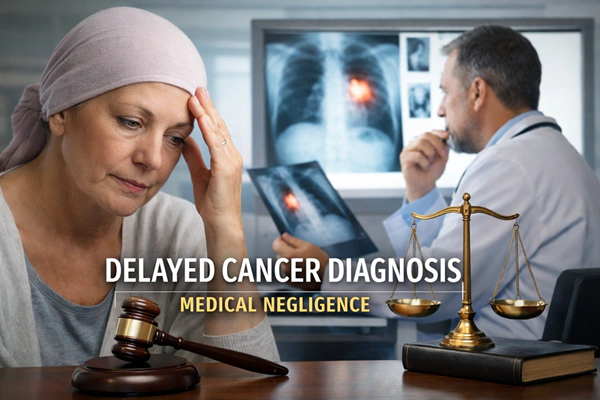
A cancer diagnosis is always difficult news to receive. But when that diagnosis arrives later than it should have, because a medical expert has dismissed your symptoms, a referral was delayed, or test results were misread, the consequences can be devastating. Treatment options may narrow which may worsen the outcome.
If this has happened to you or someone close to you, it is important to understand that a delayed cancer diagnosis is not always something you simply have to accept. In many cases, it is a form of medical negligence, and you may be entitled to make a claim.
What is a delayed cancer diagnosis?
A delayed cancer diagnosis occurs when a healthcare professional fails to identify cancer within a reasonable timeframe, and that failure causes harm. This is distinct from cases where cancer is simply difficult to detect. The key question is whether a reasonably competent healthcare professional, acting on the same information, would have identified the condition sooner.
Delays can happen at several points:
- A medical expert fails to refer a patient with persistent or worsening symptoms
- A referral is made but the appointment is significantly delayed
- Test results are misread or misreported by a radiologist or pathologist
- A screening programme fails to detect an abnormality that should have been flagged
- A specialist dismisses symptoms without appropriate investigation
Each of these situations can amount to medical negligence if it caused your cancer to progress further than it would have with timely diagnosis.
Which cancers are most commonly affected by diagnostic delays?
Whilst any cancer can be subject to a late diagnosis, certain types appear more frequently in negligence claims. This is often because the early symptoms are vague and easy to attribute to other conditions, or because the window for effective treatment is particularly time-sensitive.
- Bowel cancer is one of the most common cancers subject to late diagnosis claims in the UK. Symptoms such as changes in bowel habits, blood in the stool and abdominal pain are frequently attributed to IBS, haemorrhoids or dietary issues before a proper investigation takes place.
- Breast cancer is another area where delays occur. A lump that is dismissed as a cyst, or a mammogram that returns a false negative, can mean the difference between catching cancer at Stage 1 and discovering it at Stage 3 or 4.
- Lung cancer often goes undetected until symptoms become severe, particularly in non-smokers who may not be considered high-risk.
- Cervical and ovarian cancer are frequently missed because early symptoms, such as bloating, irregular bleeding or pelvic pain, are attributed to menstrual or digestive problems.
- Prostate cancer diagnostic delays are also well documented, particularly where PSA test results are not followed up appropriately.
What does the law say?
In England and Wales, a medical negligence claim for a delayed cancer diagnosis requires two things to be established:
- Breach of duty: The healthcare professional fell below the standard expected of a reasonably competent practitioner in their field. This is assessed against what a responsible body of medical opinion would consider acceptable practice.
- Causation: The breach caused you harm. In cancer cases, this typically means showing that an earlier diagnosis would have resulted in a better outcome, whether that is a higher chance of survival, less invasive treatment, or an improved quality of life.
Causation can be one of the most complex aspects of these cases. Even if a breach of duty is clear, medical experts must assess the extent to which the delay, rather than the cancer itself, is responsible for the harm suffered. This is why it is essential to work with a solicitor who has specific experience in medical negligence.
How long do you have to make a claim?
In most cases, you have three years from the date you became aware (or ought reasonably to have become aware) that your injury was connected to negligent medical care. This is known as the date of knowledge.
There are some important exceptions:
- If the person affected has died, the three-year period runs from the date of death or the date the family became aware of the potential negligence, whichever is later
- If the person lacks mental capacity, the three-year period does not begin until capacity is regained (if it ever is)
- Claims on behalf of children must be brought within three years of their 18th birthday if they cannot bring the claim themselves before then
Given how complex these timescales can become, it is always advisable to seek legal advice as early as possible. Waiting too long can mean losing your right to claim entirely.
What compensation can be claimed?
Compensation in a delayed cancer diagnosis claim is calculated to reflect the full impact of the negligence on your life. There are two categories of loss:
General damages cover the physical and psychological impact of the delayed diagnosis, including pain and suffering, loss of amenity, and any reduction in life expectancy. Where a person has experienced more aggressive treatment as a result of the delay (for example, chemotherapy that would not have been necessary had the cancer been caught earlier), this forms part of the claim.
Special damages cover financial losses. These can include:
- Loss of earnings, past and future
- Private medical treatment costs
- Travel expenses for appointments
- The cost of care and support at home
- Adaptations to a property where required
Every case is different. The value of a claim depends on the specific circumstances, the extent of the harm caused, and the evidence available.
What evidence supports a claim?
Building a strong delayed diagnosis claim relies on evidence. A specialist medical negligence solicitor will work with independent medical experts to review your case, but the following are typically central to any claim:
- Your full medical records, including GP notes, referral letters, test results and hospital records
- Evidence of when symptoms were first reported
- Expert medical opinion on what a competent practitioner should have done and when
- Evidence of the cancer stage at the time of actual diagnosis versus the estimated stage at the time the diagnosis should have been made
Obtaining medical records is something Marley Solicitors can assist with from the outset of a claim.
Why choose Marley Solicitors?
Medical negligence claims are not straightforward. They require detailed legal knowledge, access to independent medical experts, and the ability to translate complex clinical evidence into a compelling legal case.
At Marley Solicitors, medical negligence is not a peripheral area of our work, it is central to what we do. We understand the physical, emotional and financial toll that a late cancer diagnosis takes on individuals and families. We also understand that for many people, pursuing a claim is not only about compensation. It is about accountability, answers, and ensuring the same mistake does not happen to someone else.
We handle delayed cancer diagnosis claims on a no win, no fee basis, which means there is no financial risk in bringing a claim. We will assess your case honestly and advise you on the strength of your prospects from the outset
Taking the next step
If you believe your cancer diagnosis was delayed due to negligent medical care, the first step is to speak to a solicitor with the right experience to advise you.
Contact Marley Solicitors today for a free, no-obligation consultation. We will listen to your situation, explain your options clearly, and let you know whether we believe you have a viable claim, with no pressure and no commitment required.