

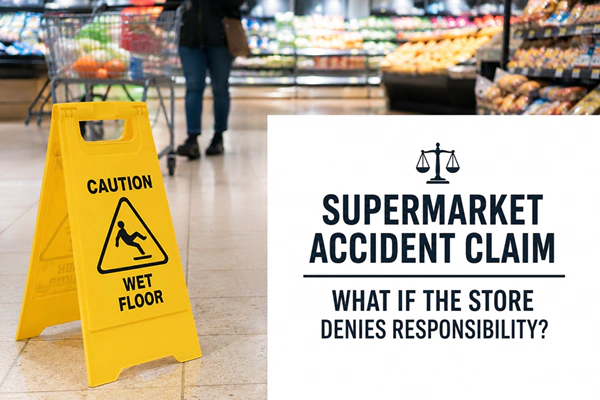
A supermarket accident can leave someone dealing with pain, lost income and on-going medical treatment. Many people assume that once an incident has been reported, the store will accept responsibility if clear mistakes were made. In reality, supermarkets often deny liability at the start of a claim.
That does not automatically mean the claim is weak
In some cases, Supermarkets often argue that the hazard was obvious. In others, they claim staff followed the correct procedures or that the injured person was partly responsible for the accident.
Understanding why supermarkets deny responsibility and knowing what evidence matters can make a major difference to the outcome of a case.
Why supermarkets deny injury claims
Supermarkets owe customers a duty of care under occupiers’ liability act. They are expected to take reasonable steps to keep visitors safe while on the premises.
When an accident happens, the store may still deny fault for several reasons:
- They believe staff followed proper safety procedures
- Cleaning records show recent inspections took place
- CCTV footage does not fully support the account of events
- Warning signs were present
- The hazard appeared moments before the accident
- They argue the injured person was distracted or careless
Insurers also know that many people abandon claims after receiving an initial denial letter.
Common defences used by supermarkets
“The spill happened moments earlier”
One of the most common arguments is that the hazard appeared only seconds before the accident, giving staff no reasonable opportunity to deal with it.
For example, if another customer drops a bottle of liquid shortly before someone slips, the supermarket may argue there was not enough time to clean the area.
This often becomes a dispute over timing. CCTV footage and witness evidence can be important here.
“Adequate warning signs were in place”
Supermarkets may claim that warning cones or signs were clearly visible near the hazard.
If signs were poorly positioned, difficult to see or added after the incident, that defence may not hold up.
Photographs taken immediately after the accident can be valuable evidence.
“Reasonable inspection systems were followed”
Many supermarkets rely heavily on cleaning logs and inspection records.
If staff are expected to inspect aisles every 30 minutes, the supermarket may argue it met its legal obligations by following that system.
However, inspection systems must be reasonable for the level of risk involved. Busy entrances during wet weather or heavily used aisles may require more frequent checks.
“The customer was responsible”
In some cases, the supermarket may argue that the injured person failed to take reasonable care for their own safety.
This could include claims that the customer:
- Ignored warning signs
- Was using a mobile phone
- Was running
- Entered a restricted area
Even if partial blame is alleged, compensation may still be possible.
What evidence helps challenge a denial?
Strong evidence is often the deciding factor in a disputed claim.
CCTV footage
Most supermarkets use extensive CCTV systems. Footage can show:
- How long the hazard was present
- Whether staff walked past the issue
- The condition of the area
- Whether warning signs existed
CCTV is not always kept for long periods. Requesting preservation of footage quickly is important.
Photographs
Photos taken immediately after the accident can help prove:
- The size of the hazard
- Poor lighting
- Missing signage
- Unsafe flooring
- Obstructions in aisles
Witness details
Independent witnesses can strengthen a claim significantly, especially where liability is disputed.
Statements from other shoppers or employees may confirm:
- The hazard had been present for some time
- Staff were aware of the issue
- No warning signs were visible
Medical records
Medical evidence links the accident directly to the injuries suffered.
This can include:
- Hospital records
- GP notes
- Physiotherapy reports
- Specialist assessments
Can a claim still succeed after responsibility is denied?
Yes.
A denied claim does not mean the case will fail. Many successful cases begin with a complete denial of liability.
Insurers often reassess their position once evidence is disclosed. CCTV footage, witness statements and inconsistencies in inspection records can weaken the supermarket’s defence.
In some cases, claims settle before court proceedings begin. Others proceed further if liability remains disputed.
A properly prepared supermarket injury claim focuses on evidence rather than assumptions.
What should you do after an accident in a supermarket?
The steps taken immediately after an accident can affect the strength of a future claim.
It is important to:
- Report the incident to staff
- Ensure the accident is recorded
- Take photographs
- Collect witness contact details
- Seek medical attention
- Keep receipts and records of financial losses
Early legal advice can also help preserve evidence before it disappears.
Speak to Marley Solicitors
If a supermarket has denied responsibility for an accident, legal advice can help clarify whether the decision is justified and what evidence may support the claim.
Marley Solicitors handles personal injury claims involving slips, trips and unsafe conditions in supermarkets across the UK.