

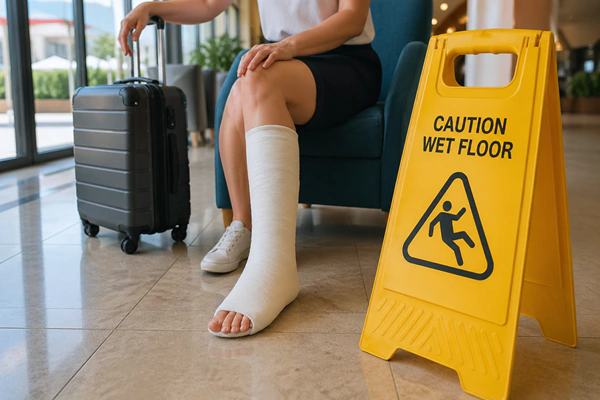
A package holiday should provide peace of mind. Flights, accommodation and transfers are all arranged in advance, leaving only the holiday itself to enjoy. When an accident happens abroad, that sense of security disappears quickly. The key question is often whether a claim can be made against the tour operator rather than dealing with a foreign hotel or airline.
When a tour operator can be held responsible
If the holiday was booked as a package, protection is often stronger than many people realise. Under the Package Travel and Linked Travel Arrangements Regulations 2018, a tour operator can be legally responsible for the proper performance of the holiday contract.
A claim may be possible when:
- The injury was caused by poor health and safety standards at a hotel or resort included in the package
- Excursions arranged through the tour operator were unsafe
- Transport provided as part of the package was not fit for purpose
- Staff or contractors working for the package provider were negligent
Responsibility does not usually depend on where the accident happened, but rather whether it formed part of the services sold in the package.
Common holiday accident scenarios
Package holiday claims often arise from situations such as:
- Slips and trips in hotel reception areas, poolside or restaurants
- Food poisoning linked to hotel catering
- Balcony or stairway accidents due to poor maintenance
- Injuries during organised excursions or activities
- Road traffic accidents involving transfer vehicles arranged by the holiday company
Each case turns on the specific facts and the level of control the tour operator had over the service.
What can be claimed
If liability is established, compensation may cover:
- Pain and suffering caused by the injury
- Medical treatment abroad and on-going care in the UK
- Loss of earnings if time off work is needed
- Travel costs linked to treatment or recovery
- Additional holiday expenses if the trip was ruined or cut short
The aim is to put the injured person back, as far as possible, in the position they would have been in if the accident had not happened.
Evidence that strengthens a claim
Strong evidence is essential in holiday injury cases. Useful material includes:
- Medical reports from doctors abroad and in the UK
- Photographs of the accident scene or hazard
- Contact details of witnesses
- Holiday booking documents and itinerary
- Records of complaints made during the trip
Even if evidence seems limited at the time, claims can still be investigated after returning home.
Time limits for bringing a claim
Most personal injury claims must be started within three years. In package holiday cases, this usually begins from the date of the accident or the date of knowledge of the injury. Acting early helps preserve evidence and improves the chances of a successful outcome.
Why legal advice makes a difference
Claims involving accidents abroad can be more complex than standard UK personal injury cases. Multiple jurisdictions, foreign insurers and package travel law all come into play.
Specialist solicitors can:
- Identify who is legally responsible
- Gather evidence from abroad
- Deal with tour operators and insurers directly
- Ensure deadlines are met
- Value the claim properly
Firms such as Marley Solicitors regularly handle accidents abroad and package holiday injury claims, guiding clients through the process from start to finish.
Final thoughts
Not every holiday accident will lead to compensation, but many do when the injury forms part of a package holiday service. Understanding who is responsible is the first step towards making a claim and recovering the costs of an unexpected injury abroad.