


A serious injury changes more than your health. It can affect your work, your home, your relationships and what the years ahead look like for you and your family. If it was caused by someone else’s negligence, compensation can pay for the care, rehabilitation, equipment and lost income you now need, for as long as you need them. Marley Solicitors acts for people across the UK in serious injury claims on a no win, no fee basis.
In these claims the money is a means to an end. The first priority is usually getting the right treatment and support in place quickly, often long before the claim itself is settled, and that is where we focus from the outset. If your injuries make travelling difficult, we will come to you at home or in hospital.
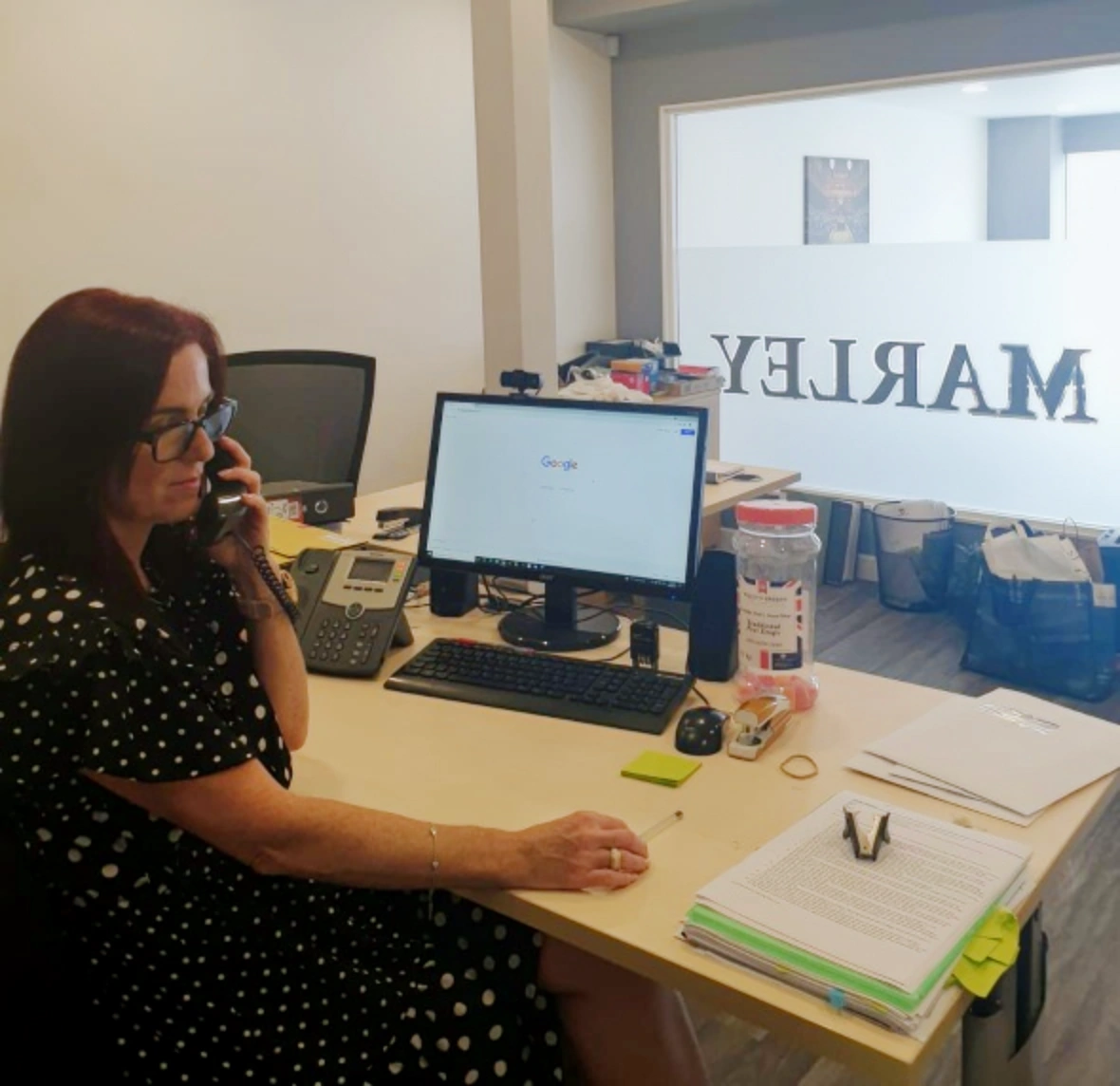 | Reviewed by Lesley Anne Delaney, Principal Solicitor and Director, Marley Solicitors Lesley was admitted as a solicitor in March 2008 and has practised in personal injury and clinical negligence litigation ever since. She is a Director and Owner of Marley Solicitors Ltd, and serves as the firm’s Compliance Officer for Legal Practice (COLP) and Compliance Officer for Finance and Administration (COFA). SRA ID 422379 | Verify on the Law Society register | Marley Solicitors Ltd is authorised and regulated by the SRA (No. 648368) | Last reviewed: October 2026 |
What counts as a serious injury?
There is no fixed legal definition. In practice, a serious or catastrophic injury is one with a lasting effect on your health, independence or ability to work, usually needing long-term treatment, care, equipment or changes to your home. We act in claims involving:
- Traumatic brain injury – from concussion with lasting symptoms to severe brain damage
- Spinal cord injury – including paraplegia and tetraplegia
- Amputation and limb loss – traumatic or surgical
- Severe burns – and the scarring and psychological effects that follow
- Multiple and complex fractures – especially where surgery leaves lasting disability
- Internal organ damage – including loss of an organ
- Loss of sight or hearing – total or partial
- Serious psychological injury – such as post-traumatic stress disorder, often alongside physical injuries
If your injury has had a lasting effect on your quality of life, it is worth a conversation even if it does not fit neatly into one of these categories.
How serious injuries happen
Most of the serious injury claims we handle arise from one of the following:
- road traffic accidents, including as a pedestrian, cyclist or motorcyclist
- accidents at work, such as falls from height, machinery and vehicle accidents
- medical negligence, including surgical errors and delayed diagnosis
- falls in public places and on poorly maintained premises
- accidents abroad, including on package holidays
The cause matters because it decides who the claim is brought against, which insurer pays, and in some cases which country’s law applies.
Serious injury claims – the current picture
Department for Transport figures for 2025, published on 30 July 2026, show that 29,918 people were killed or seriously injured on Britain’s roads, up 4% on 2024. 1,538 of them died, which means more than 28,000 people were seriously injured in road collisions alone. Those are police-reported figures, so the real number is higher, and they do not include serious injuries at work, in public places or from medical treatment.
Two changes in the last two years affect how serious injury compensation is calculated:
- The Judicial College Guidelines, 18th edition, published on 9 April 2026, increased the guideline brackets for general damages by around 8% to reflect inflation. The top brackets now exceed £500,000.
- The personal injury discount rate in England and Wales changed to +0.5% from 11 January 2025. The rate is used to convert future losses, such as decades of care, into a lump sum, on the assumption that the money will be invested. The change reduced the lump sum value of long-term future losses compared with the previous rate, which makes accurate evidence about future needs more important than ever.
How much compensation could you receive?
Compensation is made up of two parts.
General damages cover the injury itself, including pain, suffering and the loss of things you can no longer do. These are assessed against the Judicial College Guidelines. Some examples from the current 18th edition:
| Injury | Guideline bracket (18th edition, 2026) |
|---|---|
| Tetraplegia | £428,850 to £533,720 |
| Very severe brain damage | £372,570 to £533,720 |
| Paraplegia | £289,420 to £375,540 |
| Moderately severe brain damage | £289,420 to £372,570 |
These brackets cover pain, suffering and loss of amenity only. In serious injury cases the financial losses below are usually far larger, and total settlements can run into millions.
Special damages cover your financial losses, both those already incurred and those expected for the rest of your life:
- loss of earnings and pension, including where you can no longer work or must change career
- professional care and case management
- care provided by family members, which is valued and compensated too
- rehabilitation, therapies and private medical treatment
- wheelchairs, prosthetics, aids and equipment, including replacements over a lifetime
- adapting your home, or moving to more suitable accommodation
- adapted vehicles and additional travel costs
- the cost of managing the compensation, including Court of Protection and deputyship costs where needed
Future losses are calculated using actuarial tables known as the Ogden Tables, applied at the current discount rate. In the most serious cases, part of the settlement can be paid as periodical payments, an index-linked annual sum for life, so that care is funded however long it is needed. Where there is a risk of serious deterioration later, such as epilepsy following a head injury, provisional damages can allow you to return to court if that risk materialises.
Interim payments and rehabilitation
Serious injuries bring immediate costs, and families should not have to wait years for help. Where liability is admitted, or the court is satisfied you are likely to recover substantial compensation, we apply for interim payments: advances on your final compensation that can fund:
- treatment and rehabilitation
- care and support at home
- equipment and mobility aids
- adaptations or a move to suitable accommodation
- lost income while you cannot work
We also use the industry Rehabilitation Code to ask the insurer to fund an immediate needs assessment and, where appropriate, a case manager to coordinate your treatment and care. Getting rehabilitation right early improves recovery, and it also produces the evidence needed to value the claim properly.
How a serious injury claim works
- Free initial consultation. We listen to what happened and give you an honest view of your options. We can meet you at home or in hospital.
- Early contact with the insurer. We notify the party responsible and press for an early decision on liability.
- Immediate needs and rehabilitation. Where liability is admitted, we push for funding for treatment, care and equipment straight away, and apply for interim payments.
- Expert evidence. We instruct independent experts in the relevant medical specialties and, where needed, in care, accommodation and employment, to establish the full effect of your injury.
- A clear prognosis. We wait until your doctors can say with reasonable confidence how your condition will develop, so the claim reflects your future and not only your present.
- Valuation and negotiation. We value every part of your claim and negotiate with the insurer, often through settlement meetings.
- Settlement and protection. Where the injured person is a child or lacks capacity, the settlement must be approved by the court. We also make sure the money is properly protected, for example through a personal injury trust.
How long does a serious injury claim take?
Serious injury claims take longer than most, typically between two and five years, and sometimes longer where a child’s injury needs time to show its full effect. Claims where liability is admitted early can move faster, while disputed liability adds time.
The main reason for the wait is a good one. Compensation for a serious injury has to last for the rest of your life, and it cannot be reopened once settled. Settling before your prognosis is clear risks under-settling. Interim payments mean that waiting for the right outcome does not mean going without the support you need in the meantime.
Will I have to go to court?
Almost certainly not. The great majority of serious injury claims settle through negotiation. Court proceedings are sometimes issued to protect a time limit, to obtain an interim payment or to move an insurer along, but even then the case normally settles before trial. If your claim were one of the rare ones to reach a hearing, we would prepare you thoroughly and represent you throughout.
Time limits for making a claim
In most cases you have three years to bring a serious injury claim. That period runs from the date of the accident, or from the date you first knew your injury was caused by someone else’s negligence, if later.
There are exceptions:
- Children – the three years do not begin until their 18th birthday, so a claim can be brought up to their 21st
- People who lack mental capacity – no time limit runs while they lack capacity, which is common after a serious brain injury
- Fatal cases – three years from the date of death, or from the date the family learned negligence was involved
- Accidents abroad – different and sometimes much shorter time limits can apply
Courts have a discretion to allow claims outside the time limit, but it is used sparingly and should never be relied on. In serious injury cases the sooner we start, the sooner interim payments and rehabilitation can begin.
Claiming on behalf of a loved one
Many serious injury claims are brought by a family member, because the injured person is a child or cannot manage their own affairs.
For a child. A parent or guardian brings the claim as litigation friend. Any settlement must be approved by the court, and the compensation is protected until the child is an adult, or longer where they lack capacity.
For an adult who lacks capacity. A family member can act as litigation friend. Where the injury has caused a lasting loss of capacity, the Court of Protection usually appoints a deputy to manage the compensation, and the cost of that is included in the claim.
After a death. The estate can claim for what the person suffered before they died, and dependants can claim for their own losses, including loss of financial support, loss of the services the person provided, and funeral costs. Certain close relatives may also be entitled to a statutory bereavement award.
We work with families sensitively, at their pace, and keep them involved in every major decision.
Protecting your compensation and your benefits
A large settlement can affect entitlement to means-tested benefits. Compensation for a personal injury is disregarded for these benefits for 52 weeks from the first payment, and placing it in a personal injury trust can protect entitlement beyond that. We explain the options before settlement and recommend independent financial advice, so that the money lasts as long as it needs to.
No win, no fee explained
We handle serious injury claims under a conditional fee agreement. If your claim does not succeed, you pay us nothing. If it succeeds, a success fee is deducted from your compensation, capped as a percentage of your damages. We set out the cap, and what it means for you in pounds, in writing before you sign anything.
Serious injury claims usually require expert evidence, which has to be paid for as the case runs. We explain how those costs are covered, including after the event insurance where it applies, at the outset rather than later.
Why choose Marley Solicitors?
- No win, no fee. No upfront cost, and nothing to pay if the claim does not succeed.
- We come to you. Home and hospital visits whenever travelling is difficult.
- Rehabilitation first. We press for interim payments and treatment early, not at the end of the claim.
- One named person, start to finish. Your claim is handled by a named member of our team, under the supervision of our Principal Solicitor, Lesley Delaney, who you can contact directly.
- An honest view. We will tell you plainly what we think your claim is worth and how long it is likely to take.
- Support for the whole family. We act for litigation friends, deputies and bereaved families as well as injured people.
Real results

“I would highly recommend Marley’s, the lovely lady I dealt with came to my house after being hit by a car, I lost teeth, broken shoulder and nose. Very professional and kept me up to date with everything that was happening. I received 20,000 compensation thankyou again for all your help with my matter. This will make a difference being able to replace my teeth, loss of earnings and any extra physio I will need to get my arm functioning.”
Amy | Road traffic accident, multiple injuries
Serious injury claim FAQs
How long do I have to make a serious injury claim?
In most cases, three years from the date of the accident or from when you first knew the injury was caused by negligence. For children, the three years do not start until their 18th birthday, and there is no time limit while the injured person lacks mental capacity. Accidents abroad can have shorter limits, so it is worth taking advice early.
Can I get compensation before my claim is settled?
Yes. Where liability is admitted, or the court is satisfied you are likely to win, we can apply for interim payments. These are advances on your final compensation and can pay for treatment, care, equipment, accommodation and lost income while the claim continues.
Can I claim if I was partly to blame?
Yes. Your compensation is reduced to reflect your share of the responsibility, but you can still recover the rest. In a serious injury case, even a reduced award can make a substantial difference to your future care and security.
Will compensation affect my benefits?
It can affect means-tested benefits. Personal injury compensation is disregarded for 52 weeks from the first payment, and placing it in a personal injury trust can protect entitlement beyond that. Benefits that are not means-tested are generally unaffected.
What if my condition gets worse after the claim settles?
A settled claim cannot normally be reopened, which is why we wait for a clear prognosis. Where there is a known risk of serious deterioration, such as epilepsy after a brain injury, we can ask for provisional damages, which allow you to return to court for more compensation if that risk materialises.
Can family members be paid for the care they give?
Yes. Care provided by family and friends is valued and included in the claim, even though they were not paid at the time. Future care needs are also included, whether they will be met by family, by professional carers or by both.
Can I claim on behalf of a family member who cannot manage their own affairs?
Yes. A family member can act as their litigation friend and bring the claim for them. Any settlement must be approved by the court, and where the loss of capacity is lasting, the Court of Protection usually appoints a deputy to manage the money.
Can I claim for psychological injury as well as physical injury?
Yes. Conditions such as post-traumatic stress disorder, depression and anxiety are common after a serious injury and are compensated in their own right, including the cost of psychological treatment.
Will I have to go to court?
Very unlikely. Most serious injury claims settle through negotiation, often at a settlement meeting. Proceedings are sometimes issued to protect a time limit or obtain an interim payment, but even then most cases settle before trial.
What do I need to start a claim?
Very little. A brief account of what happened, when and where, and the hospitals that treated you is enough to start. We obtain medical records, police or accident reports and witness evidence on your behalf. If you have photographs, footage, details of the other party or their insurer, or records of lost earnings and expenses, keep them safe.
Do you offer no win no fee serious injury claims?
Yes. We handle serious injury claims on a no win, no fee basis. There are no upfront legal fees, and if the claim does not succeed you owe us nothing.
Serious injury compensation calculator
A calculator gives you a rough indication only, and in a serious injury case it cannot account for future care, lost earnings, accommodation or the lifetime cost of equipment, which are usually the largest parts of the claim. We will give you a more accurate assessment, free of charge, once we understand your injuries and needs.

Speak to a serious injury solicitor
Tell us what has happened and we will tell you where you stand. The first conversation is free, there is no obligation, and we can come to you at home or in hospital.
Call us: 01772 282600
Email: lesley@marleysolicitors.co.uk / yasmin@marleysolicitors.co.uk
Or complete our online enquiry form and we will call you back.
Sources
Department for Transport, Reported road casualties Great Britain, final results: 2025 (published 30 July 2026)
Judicial College, Guidelines for the Assessment of General Damages in Personal Injury Cases, 18th edition (9 April 2026)
Damages Act 1996 (personal injury discount rate, set at +0.5% from 11 January 2025)
Civil Procedure Rules, Part 25 (interim payments)
Civil Procedure Rules, Part 21 (children and protected parties)
Limitation Act 1980
Fatal Accidents Act 1976
The Rehabilitation Code 2015
Page reviewed by Lesley Anne Delaney, Principal Solicitor and Director, Marley Solicitors – October 2026. Next review: when the personal injury discount rate or the Judicial College Guidelines next change, or when the Department for Transport publishes its 2026 road casualty statistics.


