

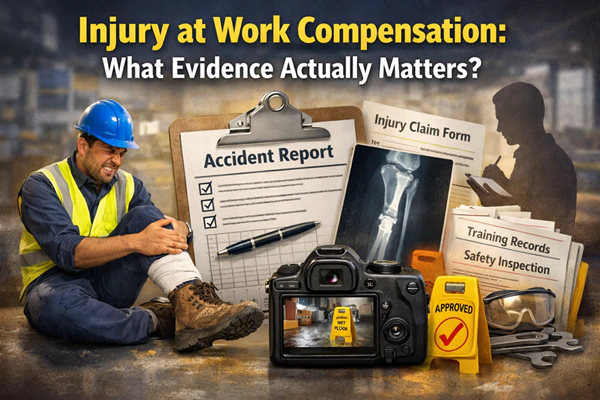
When someone is injured at work, the first concern is often recovery. The next is whether compensation can be claimed. Many people understand the basics, but fewer know what truly determines whether a claim succeeds.
This guide focuses on the practical side of injury at work compensation, specifically the evidence required and how to strengthen a claim from the outset.
Understanding employer responsibility
Under UK law, employers have a duty of care to protect the health, safety, and welfare of their employees. This includes:
- Providing proper training
- Maintaining safe equipment
- Carrying out risk assessments
- Ensuring a safe working environment
If an employer fails in any of these areas and an injury occurs, there may be grounds for compensation.
The role of evidence in a claim
A successful claim depends less on what happened and more on what can be proven. Strong evidence provides a clear link between the employer’s failure and the injury sustained.
The most important types of evidence include:
1. Accident reports
Every workplace should have an accident book. Reporting the incident immediately ensures there is a formal record.
If the accident is not recorded:
- The employer may later dispute that it happened
- Key details may be lost or forgotten
Always check that the report is accurate before it is finalised.
2. Medical records
Medical evidence is central to any compensation claim. This includes:
- Hospital or GP records
- Details of treatment received
- Prognosis and recovery time
An independent medical assessment is often arranged during the claims process. This report helps determine the level of compensation.
3. Witness statements
Colleagues who saw the incident can provide valuable support. Their statements can confirm:
- How the accident happened
- Whether safety procedures were followed
- The conditions at the time
Witness accounts can be particularly important if liability is disputed.
4. Photographs and video evidence
Visual evidence can be highly persuasive. This may include:
- The accident location
- Faulty equipment
- Hazardous conditions such as spills or obstructions
If possible, photographs should be taken as soon as possible after the incident.
5. Training and maintenance records
Employers are expected to keep records showing that:
- Staff received appropriate training
- Equipment was properly maintained
- Safety checks were carried out
If these records are missing or incomplete, it may strengthen the claim.
Common situations that lead to claims
Injury at work claims often arise from:
- Slips, trips, and falls
- Manual handling incidents
- Faulty machinery
- Lack of protective equipment
- Unsafe working practices
Each case is different, but the key issue is whether the injury could have been prevented.
Time limits for making a claim
In most cases, a claim must be made within three years of the date of the accident. There are exceptions, but acting early makes it easier to gather reliable evidence.
Delays can weaken a claim, particularly if witnesses move on or records are lost.
What affects compensation amounts?
Compensation is based on two main factors:
- General damages: For pain, suffering, and loss of amenity
- Special damages: For financial losses such as lost earnings or medical costs
Accurate documentation is essential when calculating these amounts.
Practical steps after an injury at work
To protect the right to compensation:
- Report the incident immediately
- Seek medical attention without delay
- Keep copies of all documents and receipts
- Take photographs where possible
- Obtain contact details for witnesses
These steps can make a significant difference to the outcome of a claim.
How much compensation do you get for a slip, trip, or fall at work?
Compensation for slips, trips, and falls varies depending on the severity of the injury. Typical ranges include:
- Minor injuries (sprains, minor fractures): £1,000 – £12,000
- Moderate injuries (serious fractures, on-going pain): £12,000 – £40,000
- Severe injuries (long-term disability): £40,000 – £100,000+
The final amount depends on recovery time, impact on daily life, and financial losses.
What is the average payout for a manual handling injury?
Manual handling injuries, such as back or shoulder strain, are among the most common workplace claims:
- Minor back injuries: £2,000 – £10,000
- Moderate injuries (disc issues, prolonged pain): £10,000 – £35,000
- Severe or permanent damage: £35,000 – £85,000+
Claims are stronger where proper training or lifting equipment was not provided.
How much compensation can you claim for faulty equipment injuries?
If faulty machinery or equipment caused the injury, compensation may include:
- Minor injuries (cuts, minor burns): £1,500 – £8,000
- Moderate injuries (fractures, nerve damage): £8,000 – £45,000
- Severe injuries (loss of function, amputation): £45,000 – £250,000+
Evidence such as maintenance records is especially important in these cases.
What is the payout for workplace head injuries?
Head injuries can vary significantly in severity:
- Minor head injuries (concussion): £2,000 – £12,000
- Moderate brain injuries: £12,000 – £150,000
- Severe brain damage: £150,000 – £400,000+
Higher pay outs reflect long-term cognitive or physical impairment.
Can you claim compensation for repetitive strain injury (RSI)?
Yes, RSI claims are common in office and manual roles:
- Mild RSI (short-term discomfort): £1,000 – £5,000
- Moderate RSI (ongoing symptoms affecting work): £5,000 – £20,000
- Severe RSI (permanent limitations): £20,000 – £50,000+
Proof of poor workstation setup or lack of preventative measures strengthens these claims.
How much compensation is awarded for workplace burns?
Burn injuries are assessed based on severity and scarring:
- Minor burns: £2,000 – £10,000
- Moderate burns (visible scarring): £10,000 – £60,000
- Severe burns (extensive or permanent damage): £60,000 – £250,000+
Photographic evidence is particularly valuable in these cases.
What affects the final compensation amount?
The payout is influenced by:
- The severity of the injury
- Recovery time and long-term impact
- Loss of earnings and financial expenses
- Quality of supporting evidence
No two claims are identical, so compensation can vary widely even for similar injuries.
Do all workplace injury claims go to court?
No. Most claims are settled without going to court. Strong evidence often leads to early settlement, which reduces stress and speeds up compensation.
Final thoughts
Injury at work compensation claims are not just about the incident itself. They rely on clear, well-documented evidence that demonstrates employer negligence.
Understanding what matters from the beginning helps avoid common pitfalls and ensures that a claim is built on solid ground.