

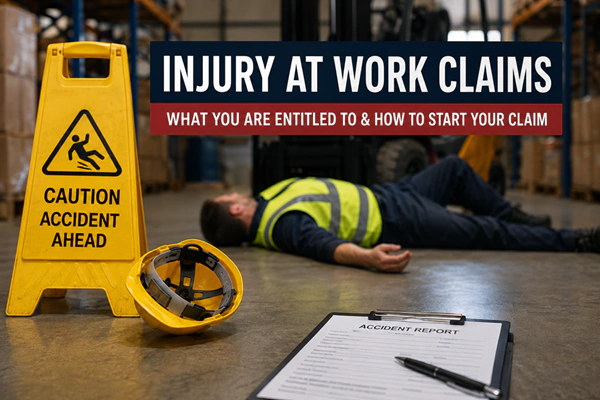
Nobody goes to work expecting to get hurt. Yet every week, people across the UK are injured doing their jobs, sometimes through no fault of their own, and many of them have no idea what to do next. If this has happened to you, or to someone close to you, this guide walks through the practical side of things: what counts as a genuine claim, what you could be owed, and how the process actually works from the first phone call to the final payout.
When does an injury at work actually count as a claim?
Not every accident at work leads to a valid claim, and it is worth understanding the difference early on so you are not left guessing.
Under the Health and Safety at Work Act 1974, your employer has a legal duty to protect your health, safety and welfare while you are on the job, so far as is reasonably practicable. That duty covers things like:
- Giving you the right protective equipment for the task
- Providing proper training before you use machinery or handle hazardous materials
- Keeping walkways, floors and stairs free of hazards
- Maintaining tools, vehicles and equipment so they are safe to use
- Making sure staffing levels do not force people to cut corners on safety
If your employer fell short in one of these areas and you were injured as a direct result, you likely have grounds for an injury at work claim. The key word is negligence: you need to show that your employer’s failure caused, or contributed to, your injury. An accident that happened purely through bad luck, with no breach of duty on your employer’s part, generally will not lead to a successful claim.
Common causes of workplace injury
Workplace injuries take many forms, and the right approach to a claim often depends on exactly how the accident happened. Some of the most frequent causes include:
- Slips, trips and falls on wet or cluttered floors
- Manual handling injuries from lifting or carrying without proper training
- Falls from height, including ladders, scaffolding and mezzanine floors
- Being struck by falling or moving objects
- Injuries caused by faulty or poorly maintained machinery
- Burns, scalds or exposure to hazardous substances
- Repetitive strain injuries from repeated movements over time
- Stress, anxiety or other mental health conditions linked directly to working conditions
Each of these has its own patterns of evidence and liability, so it is worth speaking to a solicitor who can look at the specifics of your situation rather than relying on generic advice.
What you are entitled to
If your claim succeeds, compensation is usually split into two categories.
General damages cover the injury itself: the pain, the physical limitations, and the impact on your day-to-day life. The amount depends heavily on the severity of the injury and how long recovery is expected to take.
Special damages cover the financial losses that followed from the accident. This can include:
- Loss of earnings, both past and future
- Medical costs and the cost of on-going treatment or therapy
- Travel expenses for appointments related to your recovery
- Care costs, whether provided professionally or by family
- Repair or replacement of damaged belongings
- Home adaptations or specialist equipment, in more serious cases
Because every case is different, figures vary widely. If you want a rough sense of where your case might sit before speaking to anyone, our injured at work compensation calculator gives you a free, no-obligation estimate. It is a starting point rather than a final figure, but it helps you understand what a solicitor will be assessing.
What if the accident was partly my fault?
This comes up often, and the answer is more reassuring than most people expect. Even if you played some part in what happened, you can still bring a claim. This is known as contributory negligence, and rather than blocking your claim outright, it simply reduces the final compensation in proportion to your share of the blame. If your employer still failed in their duty to keep you safe, that failure remains grounds for a payout.
Will making a claim affect my job?
This is often the biggest worry, and understandably so. The law is clear on this point: your employer cannot legally dismiss you, demote you, or treat you unfairly because you have made a claim. These protections sit alongside broader employment rights, and if you are ever unsure where a workplace injury claim overlaps with wider issues at work, our employment law team can advise on that side of things too.
Steps to take after an accident at work
What you do in the days after an accident can shape how strong your claim is later on, so it helps to know the basics in advance.
- Report it straight away. Tell your manager or supervisor, and make sure the incident is logged in the workplace accident book. If you cannot do this yourself, ask a colleague to report it on your behalf.
- Get medical attention. Even a minor-seeming injury is worth having checked, both for your own health and because medical records become important evidence later.
- Gather evidence where you can. Photographs of the hazard, contact details for witnesses, and copies of any correspondence with your employer all strengthen a future claim.
- Check if RIDDOR applies. More serious accidents must be reported by employers to the Health and Safety Executive under the Reporting of Injuries, Diseases and Dangerous Occurrences Regulations 2013. If your accident qualifies, there should be an official record you can refer to.
- Speak to a solicitor early. You do not need to have everything sorted before getting in touch. An experienced solicitor can tell you quickly whether you have a case and what to do next.
How long do you have to make a claim?
In most cases, you have three years from the date of the accident, or from when you first connected your injury or illness to your work, to start a claim. Certain occupational illnesses that develop gradually can extend this window, but it is not something to rely on. Starting the process sooner rather than later means evidence is fresher, witnesses are easier to trace, and there is less risk of missing the deadline altogether.
What does it cost to make a claim?
At Marley Solicitors, workplace injury claims are handled on a no win, no fee basis. There are no upfront costs, and if your claim is unsuccessful, you will not owe anything, provided the initial agreement terms have been met. If your claim succeeds, our success fee comes out of the compensation you receive, and this is always explained clearly before any work begins, so there are no surprises later on.
Getting started
Whether your injury happened last week or several months ago, it is worth finding out where you stand. Use our work injury compensation calculator for an initial estimate, or get in touch directly to talk through what happened. Our team deals with injury at work claims across the whole of the UK, and the first conversation costs nothing and commits you to nothing either.