

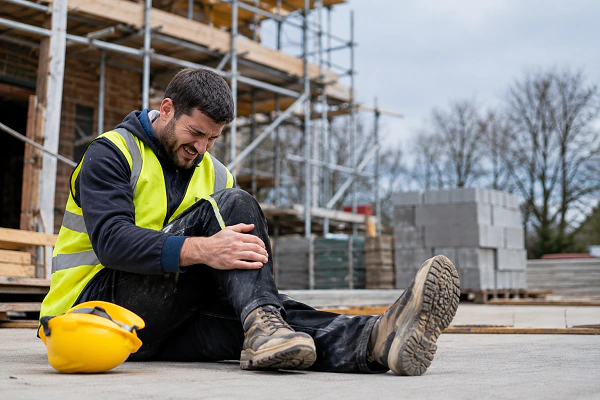
Construction is one of the most physically demanding industries in the UK. From working at height and operating heavy machinery to handling building materials and working alongside moving vehicles, construction workers face hazards that can have serious consequences when safety procedures are not followed.
Although health and safety standards have improved over the years, accidents remain a significant concern across the industry. Some workers suffer relatively minor injuries, while others experience life-changing disabilities or lose their lives following incidents that could potentially have been prevented.
Understanding construction accident statistics helps highlight where the greatest risks exist. It also raises important questions about employer responsibilities, workplace safety and the options available to workers who have been injured because of someone else’s negligence.
This guide examines the latest available UK construction injury statistics, explores the most common causes of accidents and explains what you can do if you have been injured while working on a construction site.
How many construction workers are injured each year in the UK?
The Health and Safety Executive (HSE) publishes annual statistics covering workplace accidents, fatalities and work-related ill health across different industries.
Its latest dedicated construction industry report, published in November 2025, provides figures covering the period up to March 2025.
According to the report, an estimated 50,000 construction workers sustained a non-fatal workplace injury each year, based on an average across 2022/23 to 2024/25.
The same report found that:
- Approximately 2.5% of construction workers experienced a workplace injury each year.
- This compares with 1.8% of workers across all industries.
- Around 29% of reported construction workplace injuries resulted in more than seven days away from work.
- An estimated 79,000 construction workers experienced work-related ill health, including both new and existing conditions.
These figures demonstrate that workplace accidents and occupational health problems remain a significant issue for people working in construction.
It is also important to recognise that the 50,000 figure is an annual average, rather than the total number of injuries across the entire three-year period.
Construction workplace fatalities: The latest statistics
While many construction accidents result in injuries that workers eventually recover from, others have devastating consequences.
The latest provisional HSE fatal injury figures for 2025/26 recorded 25 construction workers killed in workplace accidents across Great Britain.
This was lower than the 35 construction worker fatalities recorded in 2024/25. However, construction continued to record the highest number of worker fatalities of any main industry sector during 2025/26.
Across the five-year period from 2021/22 to 2025/26, including provisional figures for the latest year, the construction industry recorded an average of approximately 37 worker deaths annually.
The figures highlight why construction site safety cannot be treated as an administrative exercise. Employers, contractors and those responsible for managing construction projects must take reasonable and appropriate steps to protect the people working on site.
A single failure involving access equipment, machinery, site organisation or the handling of materials can have fatal consequences.
What are the most common causes of construction accidents?
Construction sites contain a variety of hazards, and the circumstances surrounding each accident can be very different.
However, HSE statistics identify several recurring causes of workplace injuries.
1. Slips, trips and falls
Slips, trips and falls on the same level were the most frequently recorded category in the HSE construction injury breakdown, accounting for approximately 25% of non-fatal injuries.
Construction environments can change throughout the working day. Loose materials, trailing cables, uneven surfaces, wet flooring and poorly maintained access routes can all create hazards.
Workers may suffer injuries such as:
- Broken bones and fractures.
- Sprained ankles and wrists.
- Back and neck injuries.
- Head injuries.
- Soft tissue damage.
Employers and those responsible for site management should take reasonable steps to maintain safe walkways, remove unnecessary obstructions and address hazards before someone gets hurt.
2. Falls from height
Falls from height remain one of the most serious dangers within the construction industry.
The HSE recorded falls from height as the leading cause of fatal construction accidents in its 2025 industry report. They accounted for 53% of construction worker fatalities across the five-year period from 2020/21 to 2024/25.
These incidents can happen when workers are using scaffolding, ladders, roofs, platforms or other elevated working areas.
Common contributing factors include:
- Inadequate edge protection.
- Unsafe or incorrectly assembled scaffolding.
- Missing guardrails.
- Poorly maintained access equipment.
- Unprotected openings in floors or roofs.
- Inadequate planning and supervision.
A fall from even a relatively modest height can cause a serious injury. More significant falls can result in brain injuries, spinal damage, paralysis or death.
Under the Work at Height Regulations 2005, employers and other relevant duty holders must ensure that work at height is properly planned, appropriately supervised and carried out safely.
3. Manual handling and lifting injuries
Construction workers regularly move heavy or awkward materials, including timber, bricks, tools, machinery and building supplies.
When lifting and carrying tasks are not properly assessed, workers can suffer injuries through excessive physical strain, repetitive movements or awkward working positions.
The HSE’s construction injury statistics identify handling, lifting and carrying as responsible for approximately 17% of non-fatal injuries.
Potential injuries include:
- Back injuries and slipped discs.
- Muscle strains and ligament damage.
- Shoulder injuries.
- Repetitive strain injuries.
- Long-term musculoskeletal conditions.
These problems are not always caused by one particular accident. Some develop gradually after months or years of physically demanding work.
Employers should assess manual handling risks and consider whether tasks can be redesigned, loads reduced or mechanical handling equipment introduced.
4. Being struck by falling or moving objects
Construction sites often involve several trades working in close proximity, with materials and equipment being moved throughout the day.
Tools, bricks, timber and other building materials can fall from scaffolding, platforms or poorly secured storage areas.
The HSE identifies being struck by moving, flying or falling objects as another significant cause of construction injuries.
Depending on the circumstances, workers may suffer head injuries, facial injuries, fractures or serious internal injuries.
Appropriate storage, exclusion zones, protective equipment and suitable site management can all help reduce these risks.
5. Construction machinery and vehicle accidents
Heavy machinery and vehicles are essential to many construction projects, but they can also create serious dangers.
Forklift trucks, excavators, dumpers and other plant machinery can cause severe injuries when operated incorrectly or used in areas where pedestrians are not adequately protected.
Potential causes include:
- Poorly maintained machinery.
- Inadequate operator training.
- Failure to separate vehicles and pedestrians.
- Reversing accidents.
- Missing or defective safety guards.
- Poor visibility around working equipment.
Employers and contractors must take appropriate precautions to ensure machinery is safe to use and that workers are protected from foreseeable dangers.
Construction-related ill health: The long-term impact
Not every workplace injury happens suddenly.
Construction workers can develop health conditions through repeated exposure to hazardous working environments, physically demanding tasks and substances used during building work.
The HSE estimated that 79,000 construction workers experienced work-related ill health each year on average between 2022/23 and 2024/25.
Of these cases:
- 53% involved musculoskeletal disorders.
- 19% involved stress, depression or anxiety.
- The remaining 28% involved other types of work-related ill health.
Musculoskeletal disorders were particularly prominent, with an estimated 41,000 construction workers affected each year.
Repetitive physical work
Carrying out the same physical tasks over extended periods can place considerable strain on the body.
Repeated lifting, bending, kneeling and working in awkward positions can contribute to on-going pain and musculoskeletal problems.
Where work-related ill health develops because appropriate precautions have not been taken, workers may have grounds to investigate whether someone was legally responsible.
Who is responsible for construction site safety?
Construction site safety involves several different parties. Responsibility does not always rest with one employer, particularly on larger projects where multiple contractors and subcontractors are involved.
The Health and Safety at Work etc. Act 1974 places duties on employers to protect the health, safety and welfare of their employees, so far as is reasonably practicable.
Depending on the circumstances, responsibilities may also apply to contractors, principal contractors, clients, designers and other parties involved in a construction project.
The Construction (Design and Management) Regulations 2015 set out specific duties for managing health and safety throughout construction projects.
These responsibilities can include:
- Carrying out suitable risk assessments.
- Providing appropriate training and supervision.
- Maintaining safe working equipment.
- Ensuring workers have suitable protective equipment.
- Planning work to minimise foreseeable risks.
- Providing safe access and working areas.
- Coordinating different contractors and construction activities.
When these responsibilities are not met and someone suffers an injury as a result, there may be grounds for a personal injury claim.
However, an accident does not automatically mean that someone was negligent. The circumstances need to be investigated to establish what happened, who owed a relevant duty of care and whether a failure to meet that duty caused the injury.
What should you do if you are injured on a construction site?
An accident at work can be distressing, particularly when the injury affects your ability to earn a living or carry out everyday activities.
If you are injured while working on a construction site, there are several practical steps that can help protect your health and preserve important evidence.
- Seek medical attention
Your health should always come first. Obtain medical treatment as soon as possible, even if the injury initially appears relatively minor.
Some injuries, particularly head, back and soft tissue injuries, may become more apparent over time.
- Report the accident
Inform your employer, supervisor or site manager about what happened. Make sure the incident is recorded in the appropriate accident book or reporting system.
- Keep evidence
Where possible, take photographs of the accident location, equipment involved and any hazards that contributed to the incident.
It can also be helpful to obtain the contact details of witnesses who saw what happened.
- Keep records of your injury and financial losses
Retain medical documents, prescription receipts, travel expenses and wage information.
If you have been unable to work, records showing lost income can be important when assessing the financial impact of your injury.
- Consider seeking legal advice
If you believe the accident happened because an employer, contractor or another responsible party failed to take appropriate safety precautions, it may be worth discussing your circumstances with a personal injury solicitor.
They can assess whether you have grounds to pursue compensation and explain what evidence may be required.
Can you claim compensation for a construction accident?
Yes, you may be able to claim compensation if you have suffered an injury in a construction accident because another party was legally responsible for what happened.
This could include an employer who failed to provide safe equipment, a contractor who neglected a dangerous site condition or another party whose negligence contributed to the accident.
You may be able to pursue a claim for injuries caused by:
- Falls from scaffolding, ladders or other working platforms.
- Falling materials or unsecured equipment.
- Faulty or poorly maintained machinery.
- Unsafe working conditions.
- Inadequate training or supervision.
- Manual handling tasks that were not properly assessed.
- Accidents involving construction vehicles.
Compensation is intended to reflect the impact of the injury and the financial losses arising from it.
Depending on the circumstances, a claim may include:
- Compensation for pain, suffering and loss of enjoyment of life.
- Lost earnings, including future loss of income where applicable.
- Medical treatment and rehabilitation costs.
- Travel expenses relating to treatment.
- Care and assistance required during recovery.
- Adaptations to your home or specialist equipment where necessary.
The value of a claim depends on the nature and severity of the injury, its long-term effects and the financial losses involved.
It is also possible to pursue a claim if you were partly responsible for the accident. However, the compensation awarded may be reduced to reflect your share of responsibility.
How long do you have to make a construction accident claim?
In most personal injury cases in England and Wales, the standard time limit for starting court proceedings is three years.
This will usually run from the date of the accident or, in certain cases involving work-related illness, the date you first became aware that your condition was linked to your work.
There are exceptions, including cases involving children, individuals who lack mental capacity and certain fatal accident claims.
Although three years may seem like a considerable amount of time, it is sensible to seek legal advice as early as possible.
Evidence can become harder to obtain as time passes. Witnesses may move on, CCTV footage may be deleted and site conditions may change.
Getting advice promptly can help ensure that important evidence is preserved and that any relevant legal deadlines are understood.
How Marley Solicitors can help with a construction accident claim
Suffering an injury at work can affect far more than your physical health. You may be unable to return to your previous role, lose income or require on-going medical treatment and rehabilitation.
If your injury was caused by another party’s negligence, Marley Solicitors can help you understand your legal options.
Our team handles accident at work claims for employees, agency workers, contractors and self-employed individuals across the UK.
We understand that every workplace accident is different. Whether you have suffered a fracture following a fall, a back injury caused by unsafe manual handling or a serious injury involving construction machinery, we can assess the circumstances and explain whether you may have grounds for a claim.
We also handle serious injury cases where people require longer-term medical support, rehabilitation or assistance with everyday activities.
Marley Solicitors operates on a no win, no fee basis for eligible claims. This means there are no upfront legal fees, and if your claim is unsuccessful, you will not have to pay our legal fees. The terms, including any success fee and applicable deductions, will be explained before you decide to proceed.
If you have been injured in a construction accident and believe someone else was responsible, contact Marley Solicitors for a free, no-obligation discussion about your circumstances.
Call 0330 999 1888 or visit our accident at work claims page to find out how we can help.