

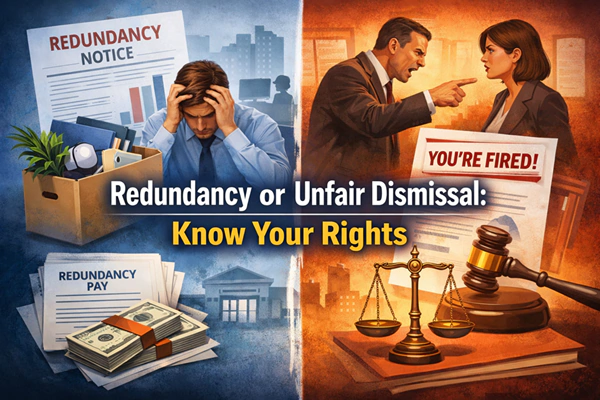
For many employees, the first indication of a problem comes suddenly. A meeting invitation appears with little warning, or a manager explains that the company is restructuring and certain roles may be at risk.
Sometimes the explanation feels unclear or rushed. Employees may leave the meeting unsure whether the situation was handled properly or whether they have any rights to challenge the decision.
Understanding how redundancy and dismissal processes are supposed to work can help clarify whether the situation may require legal advice.
Recognising the early signs of a potential issue
Redundancy and dismissal often begin with communications from an employer explaining that changes are taking place within the organisation. In legitimate redundancy situations, employers usually outline the business reasons behind the decision and explain how employees may be affected.
Concerns sometimes arise when that explanation is vague or when the process appears rushed.
For example, employees may be told that their role is being removed but notice that someone else continues performing similar work. In other cases, employees may be dismissed immediately without prior warnings or discussions.
Situations like these often prompt employees to question whether the decision was lawful.
Understanding how a redundancy process normally works
Redundancy occurs when an employer no longer needs a particular role. This might happen if a business restructures, closes a department, or introduces new systems that reduce staffing requirements.
Employment law requires employers to follow a fair process before finalising redundancy decisions.
Typically, this involves consultation with affected employees, explaining the business reasons behind the proposed redundancies, and applying fair selection criteria if multiple employees perform similar roles.
Employers are also expected to consider whether suitable alternative positions are available within the organisation before confirming redundancy.
An employer may also provide statutory redundancy pay to employees who have served for a qualifying period.
When these steps are skipped or handled poorly, questions may arise about whether the redundancy was genuinely necessary.
When dismissal may be considered unfair
Dismissal is not automatically unlawful. Employers are allowed to terminate employment for several legitimate reasons, including misconduct, poor performance, redundancy, or legal restrictions affecting the role.
However, even when a reason exists, employers must still follow a fair procedure.
Dismissing employees without giving them a chance to respond to allegations or disregarding disciplinary procedures outlined in company policies can lead to problems.
Dismissals may also raise concerns if they appear linked to workplace complaints, whistleblowing, or protected characteristics under discrimination law.
In these circumstances, legal advice may help determine whether the dismissal was handled lawfully.
Practical steps employees can take after dismissal
When employment ends unexpectedly, the first priority is often understanding the documentation provided by the employer.
Employees may receive written confirmation explaining the reason for dismissal or redundancy. This documentation may also outline notice periods, final payments, and any redundancy compensation.
It can be helpful to review these documents carefully and keep records of correspondence with the employer.
Other relevant materials may include employment contracts, workplace policies, disciplinary records, or performance reviews. These documents may help clarify whether the employer followed the correct procedures.
Understanding notice periods and final payments
Employees are normally entitled to a notice period when their employment ends unless the dismissal involves serious misconduct.
The length of notice may depend on the employment contract or statutory rules. In many cases, employees are entitled to at least one week of notice for each year of service, up to a specified maximum.
Final payments should usually include outstanding wages and any accrued holiday pay. If redundancy applies, statutory redundancy pay may also be due.
If these payments appear incorrect or incomplete, further advice may be required.
How employment disputes are formally addressed
When concerns arise about the fairness of a dismissal, employees may have the option to challenge the decision.
This often begins with raising a grievance or appealing the dismissal internally if the employer provides that option.
Should the issue remain unresolved internally, reaching out to the Advisory, Conciliation and Arbitration Service could be the next step. This process enables both parties to investigate the possibility of reaching a settlement before initiating legal proceedings.
If conciliation does not resolve the dispute, the claim may proceed to an employment tribunal.
Why time limits are important
Employment claims are subject to strict time limits.
In most cases, claims relating to unfair dismissal must be started within three months minus one day from the date employment ended.
Because of this short timeframe, employees who suspect their dismissal may have been unfair often benefit from seeking advice promptly.
Delays can make it more difficult to pursue a claim, even when legitimate concerns exist.
Where an employment rights solicitor becomes involved
An employment rights solicitor can review the circumstances of the dismissal and determine whether the employer followed proper procedures.
This may involve examining employment contracts, reviewing workplace policies, and analysing communications between employers and employees.
Solicitors may also assist with negotiations or settlement discussions where appropriate.
Legal representation can assist in presenting the claim clearly and providing relevant evidence if the dispute reaches an employment tribunal.
Moving forward after dismissal
Facing redundancy or dismissal can be unsettling, particularly when the reasons for the decision are unclear.
Understanding the steps employers are expected to follow can help employees assess whether the process was handled fairly.
For individuals unsure about their rights, seeking redundancy legal advice in the UK or wanting to speak with an unfair dismissal solicitor may provide clarity about the options available and whether further action may be appropriate.